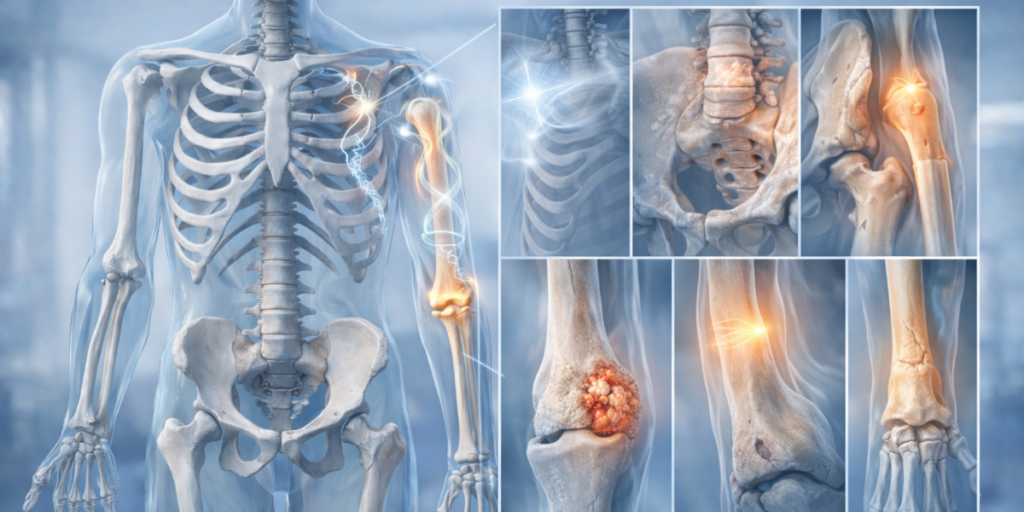
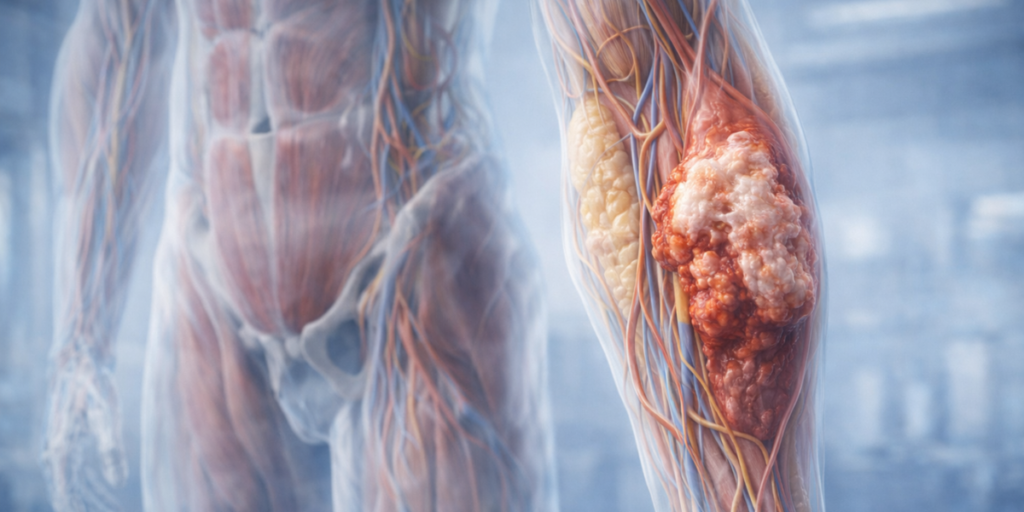
Soft tissue sarcoma is a rare group of cancers that arise from the body’s soft tissues, including muscles, fat, blood vessels, nerves, tendons, and connective tissues. Although uncommon, soft tissue sarcoma can become aggressive if not diagnosed and treated at an early stage. Awareness of symptoms and timely evaluation by a soft tissue sarcoma specialist in Dehradun plays a critical role in improving treatment outcomes.
Soft tissue sarcomas can develop anywhere in the body but are most frequently found in the arms, legs, trunk, and retroperitoneal region. These tumors often grow silently, making early medical attention essential for successful treatment.
There are more than 50 subtypes of soft tissue sarcoma, including liposarcoma, synovial sarcoma, leiomyosarcoma, and fibrosarcoma. Each subtype behaves differently and requires a tailored treatment approach. Early-stage soft tissue sarcoma is usually localized and can be treated effectively with surgery and supportive therapies. Delayed diagnosis increases the risk of tumor growth, recurrence, or spread—most commonly to the lungs.
Early consultation with a qualified soft tissue sarcoma specialist in Dehradun ensures accurate diagnosis and prevents avoidable treatment complications.
The most common symptom of soft tissue sarcoma is a painless lump or swelling that gradually increases in size. As the tumor enlarges, it may cause pain, pressure, numbness, or limitation of movement due to compression of nearby muscles or nerves.
Certain red flags should never be ignored:
Any persistent or enlarging soft tissue mass should be evaluated promptly by a sarcoma specialist.
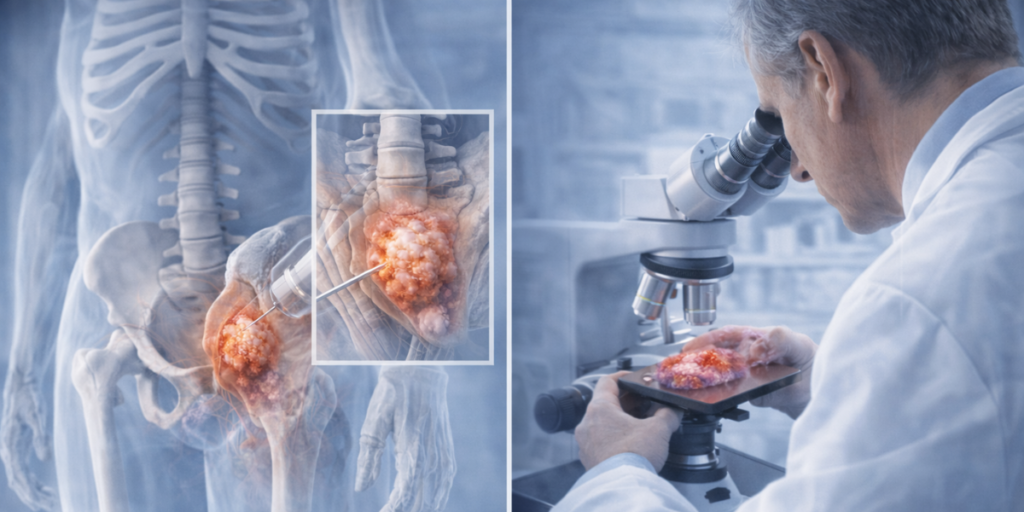
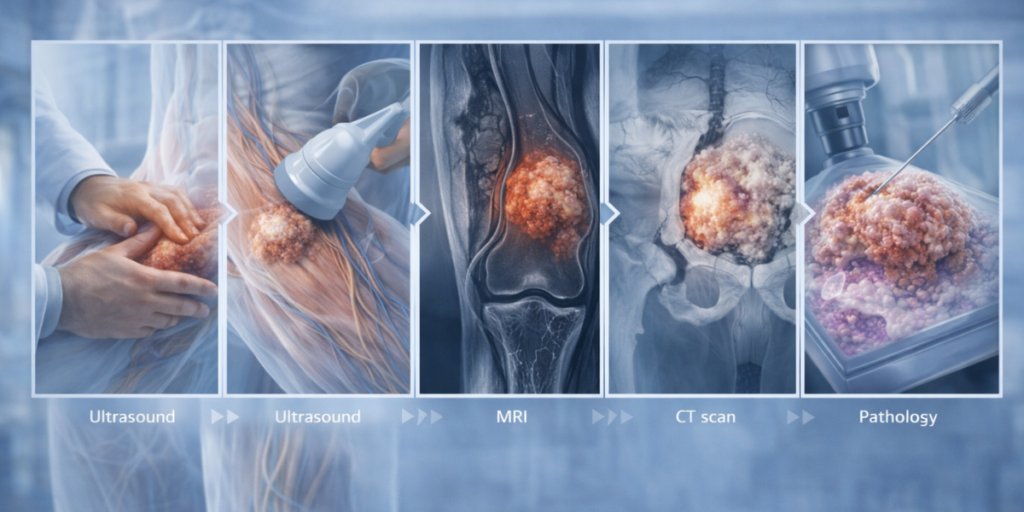
Evaluation begins with a thorough clinical examination, focusing on the size, depth, location, and consistency of the mass. MRI is the preferred imaging modality as it provides detailed information about tumor extent and its relationship with surrounding structures. CT scans are useful for chest and abdominal evaluation, particularly to detect lung metastasis, while PET scans may be used in selected cases.
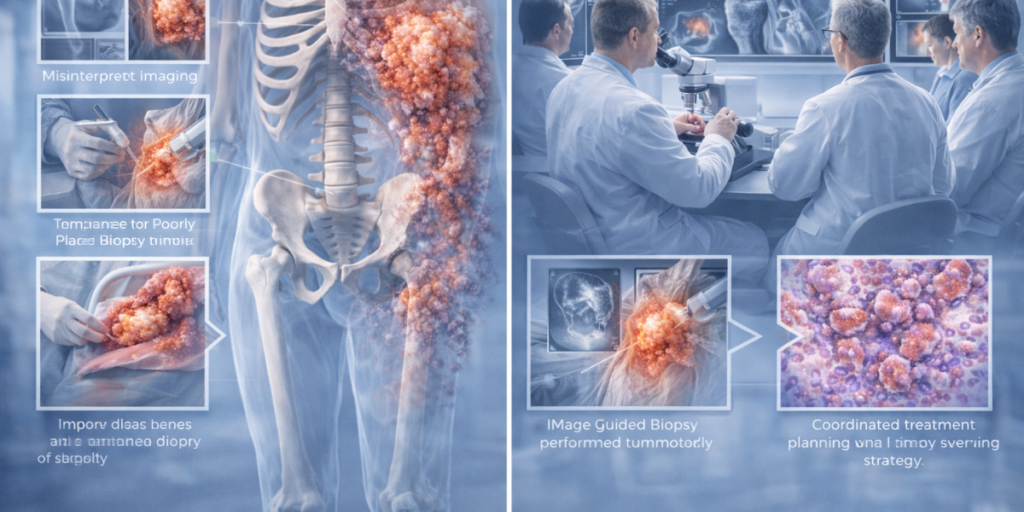
A biopsy is mandatory to confirm the diagnosis and determine the sarcoma subtype and grade. Image-guided core needle biopsy is commonly performed. It is crucial that the biopsy is planned and executed by an experienced sarcoma specialist, as improper biopsy can complicate future surgery and increase recurrence risk.
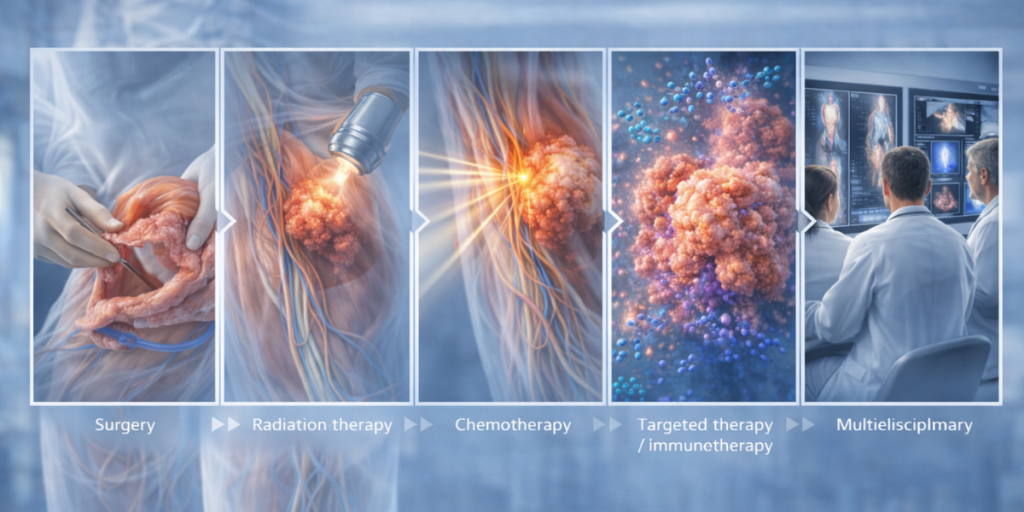
Treatment of soft tissue sarcoma depends on tumor size, grade, location, and histological subtype. A multidisciplinary approach offers the best outcomes.
Surgery is the cornerstone of treatment for localized soft tissue sarcoma, aiming for complete tumor removal with clear margins while preserving limb function. Radiation therapy may be used before or after surgery to reduce the risk of local recurrence, especially in high-grade or large tumors. Chemotherapy and targeted therapies are used selectively in advanced or aggressive cases, depending on tumor biology.
Post-treatment rehabilitation and long-term follow-up are essential to restore function, monitor recovery, and detect recurrence at an early stage.
Dehradun has become a growing center for advanced sarcoma care, offering modern imaging, precise diagnostics, specialized surgery, and coordinated oncology services. Patients now have access to expert treatment without the need to travel far, under the care of a dedicated soft tissue sarcoma specialist in Dehradun.

Dr. Narendra Singh Butola is a highly experienced Orthopaedic Oncologist and Sarcoma Specialist, widely recognized as the first dedicated bone and sarcoma specialist in Uttarakhand. He has extensive expertise in diagnosing and treating soft tissue sarcomas using limb-preserving, evidence-based approaches.
Professional Profile
Under expert supervision, patients receive comprehensive sarcoma care including:
Choosing a specialized soft tissue sarcoma specialist in Dehradun ensures precise diagnosis, safer surgery, and improved long-term outcomes.

Soft tissue sarcoma is a rare but serious cancer that demands early recognition, accurate diagnosis, and specialized treatment. Painless, enlarging soft tissue lumps should never be ignored. Imaging and biopsy are essential for diagnosis, while surgery remains the primary treatment, supported by radiation or systemic therapy when required.
With advanced sarcoma care available in Dehradun, patients can now receive expert treatment closer to home. Under the care of Dr. Narendra Singh Butola at Graphic Era Institute of Medical Sciences, patients benefit from modern, compassionate, and outcome-focused sarcoma management—leading to better survival and quality of life.